
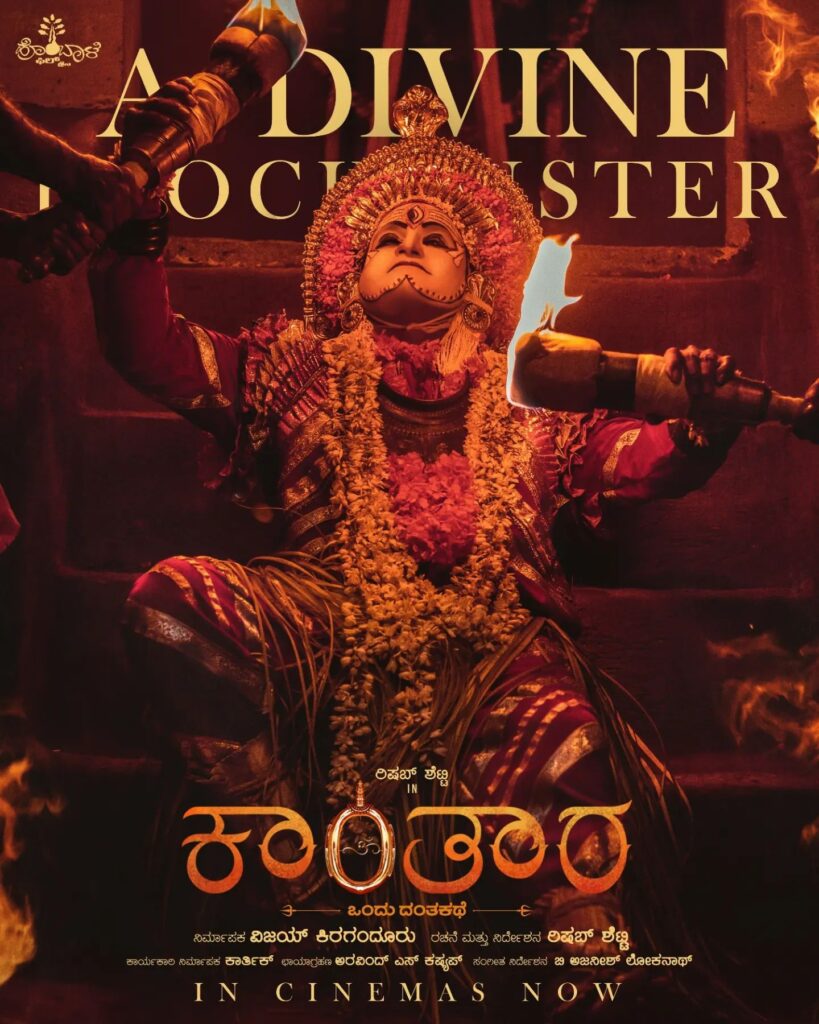
If you are here after reading the title of the blog, please note that this is not a review of the movie. I am not a movie reviewer, nor do I know anything about the art of filmmaking. So, it would be too much for me to comment on anything about the movie.
Having said that, I would like to go into the cultural aspect of the movie and try to pen my thoughts regarding the rituals and traditions shown in the movie and how it resonated with the masses and managed to pull audiences to the theatre without any marketing campaign or a celebrity star cast.
Kantara translates to Mystical Forest. The central plot of the movie is about a village where the villagers believe in the local deity who protects the village and their property and lives from any harm and how in the end the faith of the villagers is proven true against the face of adversity. In between, there are various sub-plots to make the movie interesting.
The most talked about part of the film is the climax where the demi-god takes possession of the body of the protagonist and how he punishes the villain for his evil deeds. The climax will surely give you goosebumps and have a lasting impression on your mind. The scene is something that is rarely depicted in Indian cinema and that too in such an unfiltered and raw way.
The film shows the ritual of Bhootha Kola which is a very common form of worship in coastal Karnataka. Bhootha Kola is performed by a person who is said to be a temporary incarnation of God during the time he performs the ritual. With aggressive and fierce dance moves, the whole performance is accompanied by drums and music to complete the pooja rituals. By praying together during Bhootha Kola, the community seeks the blessing of the local deity to get rid of the different problems plaguing the community.
The audiences, especially in North India, who watched the film in Hindi dubbed version or in the original Kannada language with subtitles have never heard of Bhootha Kola. Nor have they ever heard about the various folklore associated with the deities guarding the various communities. But when the scenes of the Bhootha Kola were being played on the scene, it managed to connect with the audience, irrespective of the fact that most of the people in the audience were from other parts of India. Be it the so-called Gen Z, Millennials or whatever the people born in the various decades are called these days, were able to get into the main theme of the scene without any difficulty. There was a collective appreciation and awe for the scene which is quite difficult to fathom for those who think that most people these days don’t believe in our ancient traditions.
The self-proclaimed intellectuals say that the new generation cannot relate to our culture, traditions, rituals, or way of living, therefore they need to westernize the content to suit the needs of Gen Z with mindless dialogues, crappy songs and lousy screenplay. This movie is an example of how a story that is grounded in the local traditions and incorporated the local rituals can make an impact in the minds of the new generations. It is accepted and loved by everyone in the country irrespective of the person’s place of origin.
This goes on to show that a story, that has the flavour of the land and can bring about the emotions that people feel towards their belief, doesn’t need to rely on any external factors to sustain itself in the competitive markets. A strong conviction along with faith and respect for the culture is paramount in people living in India. The so-called Gen Z are not different in any way as they too retain the same values passed on from generations. Therefore, considering them a distant species is a mistake that is made by most people these days. Instead of wasting time and resources in building a story that is below average in every respect, it would be more prudent to develop a story that can beautifully incorporate the local culture and tradition with the modern times.
Kantara is a masterpiece which should not be missed at any cost. And we should make it a point to watch these type of movies which celebrates our culture so that more such stories and art form can reach the masses and help in reviving our age-old culture and glorious traditions.
I absolutely agree with you. Our rituals are so diverse and power packed that they do not need to be reinvented to appeal the ‘Marvel-Loving’ generation. They are far more larger than life than the super heros of the west. But sadly the gen z heave only seen the portrayal of our god’s as a ever-loving entity. But thanks to this movie, now we know that there is another facet of our gods and Demi gods – something which is more relevant and required in today’s times